It’s Not Just Dictation: How Voice-to-text Quietly Transformed My Daily Flow
Have you ever felt like there’s just not enough time in the day to get everything done? I used to juggle notes, messages, and to-do lists while rushing between work and family moments—until I truly saw what voice-to-text could do. It wasn’t about typing faster; it was about thinking aloud and letting my phone catch it all. This small shift didn’t just save minutes—it gave me mental space, reduced stress, and helped me stay present. I stopped fighting my phone and started talking to it. And in doing so, I found a quieter, calmer way to move through my day. If you’re overwhelmed by the constant tap-tap-tap of screens, this might be the simplest change you never knew you needed.
The Moment I Stopped Typing and Started Talking
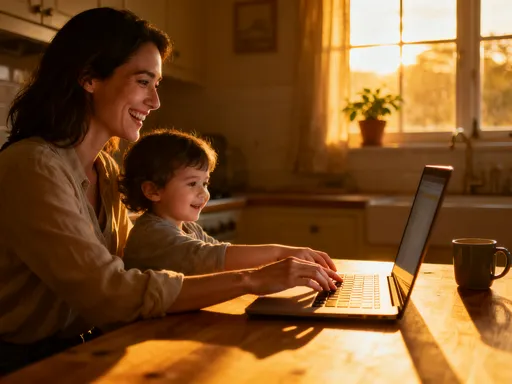
It was a Tuesday morning—nothing special, but everything felt heavy. I was packing lunches, answering work emails with one hand, and trying to remind my daughter to wear her jacket. My phone buzzed nonstop: a calendar alert, a message from my sister, a grocery reminder I’d scribbled but couldn’t read. I remember standing at the kitchen counter, thumb hovering over the screen, trying to type a quick note to myself about picking up dry cleaning. My fingers slipped. I backspaced. Tried again. And suddenly, I just said it out loud: “Remind me to get the dry cleaning after school.”
And my phone listened. It didn’t judge my tone or the slight pause between “dry” and “cleaning.” It just captured it. That tiny moment changed everything. I wasn’t just using voice-to-text to send a fast message anymore—I was using it to offload my brain. For the first time in years, I wasn’t translating my thoughts into keystrokes. I was thinking, and the machine was keeping up. It felt like handing off a backpack full of rocks I didn’t realize I’d been carrying.
Before that, I thought of voice tools as a last resort—something you used when your hands were messy or you were driving. But that morning showed me it was more than convenience. It was about mental relief. The constant act of typing, even short notes, requires focus. It pulls you out of the moment. But speaking? That’s natural. That’s how we’ve communicated for generations. I realized I’d been forcing myself to adapt to my devices, instead of letting them adapt to me. And once I flipped that switch, my whole rhythm changed.
Beyond Messages: Capturing Ideas Before They Slip Away
We’ve all been there—half-asleep at 2 a.m., a brilliant idea hits, and by morning, it’s gone. Or you’re driving, and a solution to a problem at work pops into your head, but you can’t write it down. I used to lose those moments all the time. I’d think, “I’ll remember this,” and then life would happen, and I wouldn’t. It wasn’t forgetfulness. It was overload. My brain was too busy managing the now to hold onto the “maybe later.”
Then I started using voice notes like a safety net for my thoughts. Now, when an idea comes—whether I’m folding laundry, waiting in the school pickup line, or lying in bed—I just say it. “Start a weekend breakfast rotation with the kids.” “Call the dentist about Maya’s appointment.” “Research online courses for beginner photography.” I don’t worry about grammar or structure. I just speak. And later, when I have five quiet minutes, I listen back and turn those sparks into action.
What surprised me most was how this simple habit boosted my creativity. Ideas used to feel fragile, like dandelion fluff you can’t grab without it blowing away. Now they feel solid, recorded and retrievable. I’ve started organizing these notes in a digital notebook app that syncs across my devices. I tag them by topic—family, work, personal growth—so I can find them easily. It’s not fancy, but it works. And the best part? I’m not chasing ideas anymore. I’m collecting them, like seashells on a beach walk, knowing I’ll sort them when the time is right.
One night, I woke up thinking about a long-overdue letter to my mom. Instead of getting up, I whispered into my phone, “Hey Mom, I’ve been thinking about our trip to the lake when I was ten…” I fell back asleep, and the next morning, I had the beginning of a heartfelt message already waiting. That’s the magic of voice-to-text: it turns fleeting emotions into lasting connections, without asking you to do extra work.
Easier Family Coordination Without the Back-and-Forth
Running a household can feel like managing a small company—except the employees don’t always check their email. I used to send endless texts: “Did you pack your gym clothes?” “Don’t forget piano at 4.” “What do you want for dinner?” And the replies? Often delayed, misunderstood, or lost in a sea of notifications. It created unnecessary stress. A simple reminder could turn into a three-message argument because tone got lost in text.
Then I started using voice messages for family coordination. Instead of typing, I’d say, “Hey sweetie, just a reminder—your science project is due tomorrow. You’ve got this!” or “Honey, I’m starting dinner. Can you pick up milk on your way home?” There’s something about hearing a voice that softens the message. It carries warmth, patience, a smile. My teenager actually responds faster now—because she hears my voice, not just a demand on a screen.
I even leave audio reminders around the house. While cooking, I’ll say, “Add chicken broth to the grocery list,” and my phone captures it instantly. My partner does the same. We’ve stopped duplicating lists or arguing about who forgot what. It’s not perfect, but it’s more human. There’s less friction, more connection. And when I’m in a rush, I don’t have to stop what I’m doing to type. I just talk, and life keeps moving.
One Saturday, I recorded a quick voice note for the whole family: “Okay team, here’s the plan—laundry in the morning, grocery run after lunch, movie night at 7. Who’s in charge of popcorn?” I played it at breakfast, and the kids laughed. It felt like a mini family meeting, but without the pressure. Voice tools didn’t solve all our scheduling problems, but they made them feel lighter, more manageable, and even a little fun.
Writing Without the Blank Page Anxiety
I’ve always loved writing, but I’ll admit—I dread the blank page. Whether it’s an important work email, a birthday card, or a personal journal entry, that empty screen can freeze me. I start over. Delete. Rewrite. My inner critic gets loud: “This sounds stiff.” “That’s not good enough.” I waste time polishing words before I even know what I want to say.
Then I tried writing by speaking. I opened my notes app and just talked. “Okay, I need to write to the school about the field trip. I want to thank them for organizing it, mention that Maya forgot her hat, and ask if they need more chaperones.” I spoke it like I was telling a friend. No pressure. No cursor blinking like a judge. When I finished, I had a rough draft—real thoughts, real words. Then I edited it, cleaned it up, and sent it. It took half the time, and it sounded more like me.
This changed how I approach all kinds of writing. Now, I don’t fight the blank page. I talk first, write later. It’s like sketching before painting. I get the shape of my thoughts down without worrying about the details. And because I’m speaking naturally, my tone stays warm and authentic. No more stiff, robotic emails. Just me, saying what I mean.
I’ve also started using this for journaling. Instead of sitting down with a notebook, I’ll take a walk and dictate my thoughts. “Today was tough. I felt overwhelmed after the meeting. But I’m proud of how I handled the kids’ meltdown.” Speaking my feelings feels easier than writing them. There’s less pressure to be poetic or profound. I just say what’s true. And later, I can choose to transcribe it, reflect on it, or just leave it as a private voice note. It’s writing that fits into real life, not the other way around.
Making Time for Myself, One Voice Note at a Time
Let’s be honest—self-care often feels like one more item on the to-do list. “Schedule a massage.” “Drink more water.” “Practice gratitude.” It’s well-intentioned, but it can feel like another chore. I used to skip it, not because I didn’t care, but because I didn’t have the energy to add one more thing.
Then I realized I could care for myself without adding anything at all. I started using voice journaling during moments I already had—my morning walk, the drive to drop off the kids, even folding laundry. I’d press record and say whatever was on my mind. “I’m tired today, but I’m trying to be patient.” “I felt proud when I finished that project.” “I miss talking to my sister more.” No structure. No rules. Just honesty.
This small habit became a form of mindfulness. Instead of letting my thoughts swirl in silence, I gave them a voice. And in doing so, I understood them better. I noticed patterns—when I felt anxious, what drained me, what lifted me. I wasn’t analyzing or fixing. I was just listening to myself. And that made a difference.
Over time, these voice notes became a record of my growth. I’d go back and listen, not to critique, but to remember. “I can’t believe I felt that way last month.” “Look how far I’ve come.” It wasn’t about achieving anything. It was about presence. And the beauty of it? It didn’t require special tools or extra time. Just my voice and a few quiet moments. Self-care stopped feeling like a luxury and started feeling like a conversation—with myself.
Why It Feels So Natural—And Why We Overlook It
Here’s the thing: we’ve been speaking for thousands of years. Writing? A few thousand. Typing? Less than a century. So why do we treat voice as the backup option? Why do we default to tapping and swiping, even when it’s harder?
I think it’s habit. We grew up learning to type. We were taught that written words are more “serious” or “professional.” We worry about being overheard. I know I did. At first, I felt silly talking to my phone at home. What if the dog barked? What if my partner walked in? But the more I used it, the more natural it felt. And the benefits—less strain, more flow—outweighed the awkwardness.
There’s also a privacy myth. We assume voice input means recording everything. But most tools process speech locally or delete recordings quickly. You’re not being saved forever. And if you’re concerned, you can disable voice history in your settings. It’s not about being watched. It’s about being heard.
What really held me back wasn’t the tech—it was the mindset. I had to unlearn the idea that efficiency meant speed-typing or multitasking. Real efficiency is about reducing friction. And speaking is the least friction-filled way we communicate. Once I accepted that, I stopped seeing voice-to-text as a gadget and started seeing it as a companion—a quiet helper that lets me think, create, and connect without burning out.
Building a Smoother Life, One Spoken Word at a Time
Looking back, I realize voice-to-text didn’t just change how I use my phone. It changed how I move through my days. It gave me back time I didn’t know I was losing. It quieted the mental noise. It helped me show up better—for my family, my work, and myself.
This isn’t about replacing typing. There’s still a place for careful emails, handwritten cards, and quiet reflection. But voice-to-text added a new layer to my life—one that’s more fluid, more forgiving, more human. It’s not flashy. It doesn’t require learning new apps or buying expensive gear. It’s already on your phone. And it’s ready when you are.
If you’ve ever felt like you’re constantly catching up, like your brain is too full and your time too short, I want to invite you to try something simple. Next time you need to write a note, send a message, or just capture a thought—don’t type it. Say it. Out loud. Let your phone listen. See how it feels to speak your truth without editing, without pressure.
You might be surprised by how much lighter your day becomes. How much clearer your thoughts feel. How much more present you can be, not because you did more, but because you let technology do a little—so you could do less. This small shift didn’t fix everything in my life. But it made everything feel a little smoother, a little kinder, a little more like me. And sometimes, that’s exactly what we need.