Through the Lens of the Wild: Chasing Light in Kingston’s Hidden Sanctuaries
You know that feeling when you’re standing somewhere so alive, your camera can’t keep up? That’s Kingston’s protected zones for you—wild, real, and absolutely stunning. I went chasing light through Blue Mountains and coastal reserves, never expecting such untouched beauty so close to the city. These sanctuaries aren’t just green spaces—they’re breathing archives of Jamaica’s soul. Whether you’re a hobbyist or a pro, photographing here changes how you see nature. Let me take you where the jungle meets the lens.
The City Meets the Wild: Kingston’s Dual Identity
Kingston, Jamaica’s capital, pulses with energy—markets buzz, horns echo through narrow streets, and the scent of jerk spice lingers in the air. Yet just beyond this urban rhythm lies a quieter world, one where silence is broken only by bird calls and rustling leaves. Within an hour’s drive from downtown, protected landscapes unfold: misty highlands, coastal wetlands, and forested ridgelines that have remained largely unchanged for centuries. This juxtaposition defines Kingston’s unique character—a city that lives in harmony with its wild surroundings, rather than in opposition to them.
The Blue and John Crow Mountains National Park, a UNESCO World Heritage Site, stretches across the eastern edge of the metropolitan area. Covering over 48,000 hectares, it serves as both a natural shield and a sanctuary. It protects vital watersheds that supply drinking water to Kingston and supports ecosystems found nowhere else on Earth. What makes this duality so compelling for photographers is the immediacy of transition—from traffic-laden roads to quiet trails beneath a canopy of mahogany and cedar. You can sip coffee in a downtown café and, within two hours, be standing at a vantage point where the only movement is sunlight filtering through fog.
This proximity offers rare photographic opportunities. The contrast between city and forest becomes a narrative in itself. A morning shot of downtown Kingston, with its pastel-colored colonial buildings and bustling markets, can be followed by an afternoon capture of a solitary hawk circling above a cloud-draped peak. The shift isn’t just geographical—it’s emotional. Photographers are invited to document not just landscapes, but the delicate balance between human life and natural preservation. In this way, Kingston becomes more than a cultural destination; it emerges as a living laboratory of coexistence.
Why Protected Areas Matter: More Than Just Scenic Backdrops
Protected areas around Kingston are not merely scenic escapes—they are essential to the island’s ecological health and cultural continuity. These zones act as guardians of biodiversity, preserving habitats for species that exist nowhere else. Among them is the Giant Swallowtail butterfly, Jamaica’s largest endemic butterfly, whose survival depends on specific host plants found only in these forests. Its iridescent wings, when caught in the right light, offer a fleeting but breathtaking subject for macro photography—but more importantly, its presence signals a functioning ecosystem.
Beyond individual species, these reserves protect entire ecological networks. The Blue Mountains are home to over 130 species of birds, including the endangered Jamaican Blackbird and the elusive Crested Quail-Dove. The forests also regulate climate at a local level, absorbing rainfall during storms and releasing it slowly into rivers and aquifers. This natural water management system is critical for a city that faces increasing pressure from urban expansion and climate variability. Photographing these landscapes, therefore, is not just an artistic pursuit—it is a form of documentation that highlights their value beyond aesthetics.
Photography also plays a role in conservation advocacy. Images have the power to connect people emotionally to places they may never visit. A well-composed shot of a dew-covered spiderweb in a rainforest understory, or a misty ridge at sunrise, can inspire viewers to care about preservation. But this power comes with responsibility. Ethical photography means avoiding actions that disturb wildlife or damage vegetation—no baiting animals, no trampling off-trail, and never removing natural materials. The goal is not just to capture beauty, but to honor it by leaving no trace.
Local communities are also key stewards of these lands. Many residents in mountain villages practice sustainable agriculture, growing coffee and vegetables using methods passed down for generations. Their knowledge contributes to long-term conservation, and including their stories in visual narratives adds depth and authenticity. When photographers engage respectfully—with permission and cultural sensitivity—they contribute to a broader understanding of why these protected areas matter. They become storytellers, not just image-makers.
Blue Mountains: Where Mist Paints the Frame
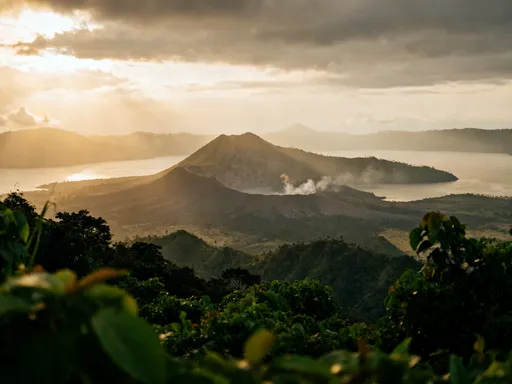
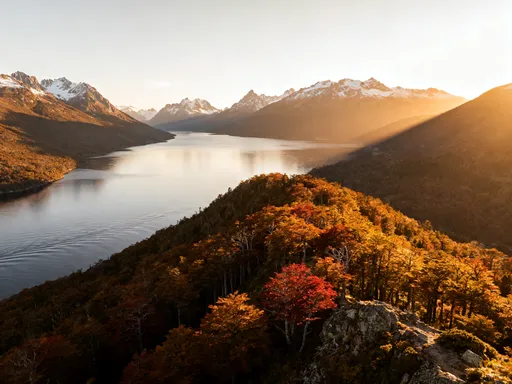
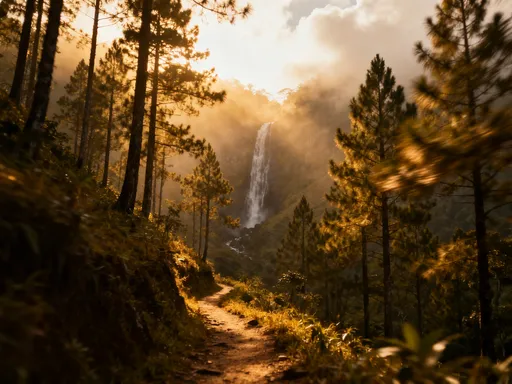
Rising over 2,200 meters above sea level, the Blue Mountains offer some of the most dramatic photographic landscapes in the Caribbean. The journey begins before dawn, when the city is still asleep and the air is cool. Driving up winding roads, you pass small farms and roadside stands selling roasted corn and fresh breadfruit. As elevation increases, the temperature drops and the fog rolls in, transforming the landscape into something almost otherworldly. This is where light becomes your most important subject—not just what you see, but how it moves, shifts, and reveals.
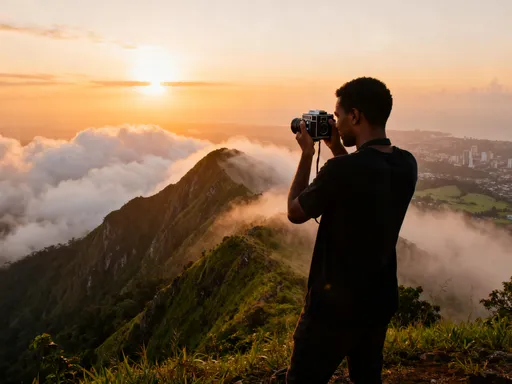
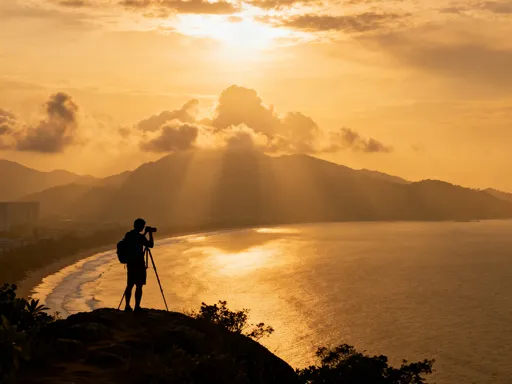
One of the most rewarding experiences is photographing the sunrise from Hardwar Gap or near Holywell Recreation Park. At around 5:30 a.m., the first rays of light begin to pierce the mist, casting golden streaks across the valley. The interplay of shadow and illumination creates layers in the frame—distant peaks emerge slowly, while foreground foliage glistens with dew. Using a tripod is essential here, as low light demands longer exposures. A polarizing filter helps reduce glare on wet leaves and enhances cloud definition, adding depth to wide-angle shots.
The region’s famous coffee farms, nestled into steep slopes, offer intimate storytelling opportunities. The terraced fields, tended by generations of farmers, blend human labor with natural beauty. Capturing a farmer harvesting beans at sunrise, backlit by soft golden light, creates a powerful image of resilience and tradition. Close-up shots of coffee blossoms or freshly picked cherries can be just as compelling, especially when paired with environmental context—showing how agriculture fits within the larger forest ecosystem.
For those seeking wildlife, the higher elevations are home to the Jamaican Boa and several species of anole lizards. While elusive, patient observation can yield rare moments—a snake coiled on a sun-warmed rock, or a hummingbird feeding at a forest flower. These images require quiet movement and long lenses to avoid disturbance. The key is to let the scene unfold naturally, resisting the urge to force a shot. In the Blue Mountains, the best photographs often come to those who wait.
Port Royal Mangroves & Coastal Reserves: Life in the Labyrinth
South of Kingston, along the coast, lies a different kind of wilderness—the intricate network of mangrove forests and tidal wetlands surrounding the historic town of Port Royal. These ecosystems, though less celebrated than the mountains, are just as vital. Mangroves serve as nurseries for fish, stabilize shorelines against erosion, and filter pollutants from runoff before it reaches the sea. From a photographic standpoint, they present a unique challenge: a world of reflections, tangled roots, and shifting light that demands a different approach than mountain landscapes.
Accessing these areas responsibly is crucial. Kayaking is the preferred method, allowing photographers to glide silently through narrow channels without disturbing wildlife. Local guides, often from nearby fishing communities, provide not only safe navigation but also insights into the ecological and cultural significance of the mangroves. Early morning is the ideal time, when the water is calm and mist hovers just above the surface. The stillness creates perfect mirror images—roots reflected upside down, birds perched like silhouettes on twisted branches.
Composition in mangrove environments benefits from simplicity. With so much visual complexity—overlapping trunks, aerial roots, tangled vines—it’s easy for images to become cluttered. Focusing on a single element, such as a lone heron standing in shallow water or a cluster of mangrove seedlings floating downstream, can create a stronger narrative. Using a telephoto lens to compress the scene or a wide aperture to blur the background helps isolate subjects and emphasize texture and form.
Tidal patterns play a major role in visibility and access. At high tide, many channels open up, allowing deeper penetration into the forest. At low tide, mudflats are exposed, revealing crab tracks, oyster beds, and feeding shorebirds. Each phase offers distinct photographic opportunities. Capturing the transition between tides—water slowly creeping over roots, or receding to reveal hidden pathways—adds a sense of time and movement to still images. These subtle changes remind us that nature is never static, even in places that appear unchanged for decades.
Camera in Hand: Techniques for Capturing Protected Landscapes
Photographing in Kingston’s protected areas requires more than technical skill—it demands adaptability and respect for the environment. Humidity is one of the biggest challenges, especially in dense forests and coastal zones. Moisture can fog lenses, damage electronics, and encourage mold growth on camera gear. To combat this, many photographers use silica gel packs inside lens bags and avoid sudden temperature changes, such as moving from an air-conditioned car into a hot, humid forest. Wiping lenses frequently with a microfiber cloth helps maintain clarity, especially after rain or heavy dew.
Natural light varies dramatically across these landscapes. In the mountains, early morning offers the softest illumination, with diffused light filtering through clouds. Midday sun, though harsh, can be used creatively—backlighting tree canopies to highlight translucent leaves or using shadows to create geometric patterns on trails. In the mangroves, overcast conditions often produce the most even lighting, reducing contrast and allowing for balanced exposures in complex scenes.
Understanding exposure settings is key. In low-light forest interiors, using a higher ISO (800–1600) may be necessary, especially when handholding the camera. However, shooting in RAW format allows for greater flexibility in post-processing, helping recover details in shadows and highlights. A tripod remains invaluable for long exposures, particularly during sunrise or in dimly lit wetlands where shutter speeds drop below 1/30th of a second.
Equally important are ethical practices. Drones, while tempting for aerial perspectives, are prohibited in most protected areas in Jamaica without special permits. Their noise disturbs wildlife and disrupts the tranquility of these spaces. Staying on designated trails prevents soil erosion and protects fragile undergrowth. Photographers should also avoid using flash near animals, as it can startle or disorient them. Every decision—from where to stand to how long to linger—should prioritize the health of the ecosystem over the perfect shot.
Beyond the Postcard: Finding Authentic Moments Off the Beaten Path
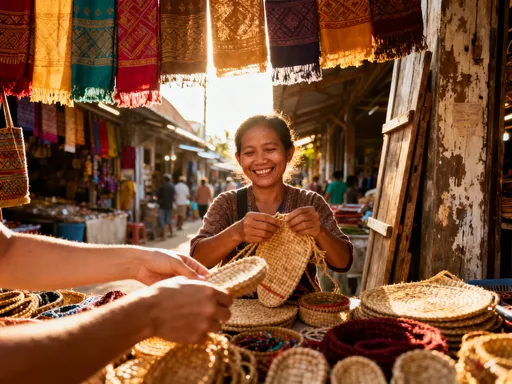
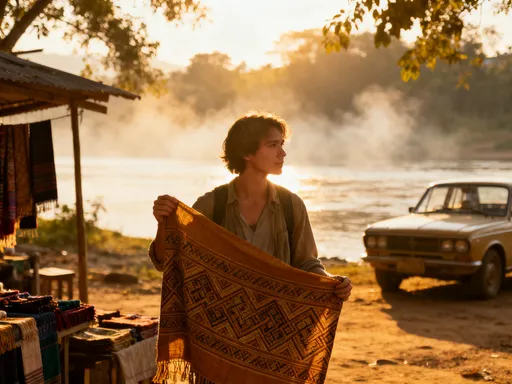
While iconic vistas have their place, the most memorable images often come from unexpected encounters. In the mountain villages near Mavis Bank or Irish Town, daily life unfolds with quiet dignity. A woman hanging laundry between fruit trees, children walking to school along a dirt path, or an elder repairing a fence with hand tools—these moments add humanity to environmental storytelling. Capturing them requires patience, humility, and above all, permission. A smile, a brief conversation, and a gesture toward your camera can open doors to genuine connection.
Conservation workers are another source of powerful imagery. Rangers patrolling trails, botanists documenting plant species, or volunteers planting native seedlings—all represent the quiet dedication behind preservation. A photograph of a ranger adjusting a camera trap, or a scientist examining a rare fern, tells a story of stewardship. These images remind viewers that protection is not passive; it requires constant effort and commitment.
Local festivals and agricultural fairs in rural parishes also offer rich visual content. Though not within protected zones themselves, these events reflect the cultural relationship between people and land. A farmer displaying prize-winning yams, a school group performing a nature-themed song, or a community planting day—all speak to the deeper values that sustain conservation. When photographed with respect and context, such moments enhance the narrative without exploiting it.
For photographers, this means shifting from observer to participant. It means slowing down, listening more than shooting, and recognizing that every image carries weight. The goal is not to create a portfolio of postcards, but to build a visual archive that honors both nature and community. In doing so, the work becomes more than art—it becomes advocacy rooted in truth and empathy.
Bringing It Home: How These Images Change Us
Returning from Kingston’s protected areas, camera full and spirit renewed, something shifts. The images we bring back do more than decorate walls or fill albums—they reshape how we see the world. Each photograph becomes a quiet act of witness, a testament to places that exist in balance, beauty, and fragility. They remind us that nature is not a backdrop for human life, but its foundation. And in sharing these images, we invite others to see, feel, and care.
For families, these photos can spark conversations about conservation, travel, and responsibility. A child seeing a picture of a hummingbird in the mist might ask where it lives, what it eats, whether it’s in danger. These questions are the beginning of awareness. For adults, especially women managing households and planning trips, these images offer inspiration—not just for where to go, but how to travel with purpose. Choosing eco-friendly tours, supporting local guides, packing out waste—small actions that align with the values captured in the frame.
Kingston, often overlooked in favor of beach resorts, reveals itself through the lens as a gateway to Jamaica’s wild heart. It challenges the notion that cities and nature must be separate. Instead, it shows how they can coexist, enriching each other in unexpected ways. The protected areas are not escape routes from urban life—they are integral to it, providing clean air, water, and a sense of continuity in a changing world.
So pick up your camera, lace your boots, and step into the mist. Let the jungle meet the lens. And when you return, let your images do more than impress—let them inspire protection, respect, and wonder. Because every photograph taken in these sanctuaries is not just a memory, but a promise: to see deeply, to tread lightly, and to keep framing the wild with love.