You Won’t Believe What I Found Driving Through Si Phan Don’s Hidden Markets
Driving through Si Phan Don, Laos, felt like stepping into a quiet dream—jungle-lined roads, Mekong waters shimmering under the sun, and villages untouched by time. But what truly surprised me? The unexpected shopping gems tucked away in plain sight. From handmade textiles to local crafts, every stop told a story. If you're planning a self-drive trip, trust me—these shopping spots will elevate your journey from scenic to unforgettable. What began as a simple island-hopping adventure turned into a rich tapestry of cultural discovery, one handwoven scarf, one village market, one quiet conversation at a time. In a world where travel often means checking off landmarks, Si Phan Don offers something rarer: authenticity you can hold in your hands and carry home in your heart.
The Allure of Self-Driving in Si Phan Don
Si Phan Don, known as the “4000 Islands,” is a riverine archipelago in southern Laos where the Mekong River breaks into a maze of channels, islets, and waterfalls. For decades, travelers have visited by boat or bicycle, hopping between Don Det, Don Khon, and Don Kong, drawn by the slow pace and lush scenery. But in recent years, self-driving has emerged as a quietly transformative way to experience this tranquil region. While the roads are modest—often unpaved, occasionally bumpy—they are navigable with small rental vehicles, motorbikes, or even e-bikes increasingly available at local guesthouses. The real advantage lies in freedom: the ability to set your own pace, pause at riverside hammocks, and most importantly, access corners of the islands that remain invisible to guided tours.
Unlike larger tourist destinations with rigid itineraries, Si Phan Don rewards spontaneity. Driving allows you to venture beyond the main footpaths, where wooden signs point to family-run craft stalls or hidden markets that only open in the late afternoon. These are not commercial hubs but organic gatherings—sometimes just a few woven mats laid out under banana trees, displaying hand-dyed fabrics or baskets made from reeds pulled from the Mekong. The self-drive traveler becomes an explorer in the truest sense, discovering commerce not as a transaction, but as a continuation of daily life. There’s a rhythm to these islands, and driving helps you sync with it.
Vehicle options vary, but most visitors opt for scooters or small automatics, which are both affordable and practical for the compact terrain. Fuel stations are sparse, so refueling before crossing the bridges between islands is advisable. Safety is generally high, with minimal traffic and locals accustomed to slow-moving tourists. Still, caution is key—especially during the rainy season, when dirt paths can turn muddy and slippery. Yet even these minor challenges add to the sense of adventure. The act of navigating Si Phan Don by car transforms the journey into something personal, a narrative shaped not by tour guides but by chance encounters and unexpected turns.
Don Det: The First Stop with Charms to Spare
Don Det, one of the most visited islands in the Si Phan Don chain, often serves as the gateway for travelers arriving from Pakse or the Bolaven Plateau. While it has embraced tourism more visibly than its neighbors, it retains a laid-back charm that feels genuine rather than performative. Along the central path—lined with guesthouses, cafes, and hammock lounges—small wooden stalls appear every few meters, each offering a glimpse into Lao craftsmanship. These are not mass-produced souvenirs shipped from distant factories, but items made locally, often by the very people selling them. A woman in a wide-brimmed hat might display a row of handwoven scarves, their patterns reflecting the colors of the jungle and river. Nearby, a young man arranges bamboo lamps and carved wooden spoons, explaining in broken English how each piece is shaped from fallen trees to avoid harming the forest.
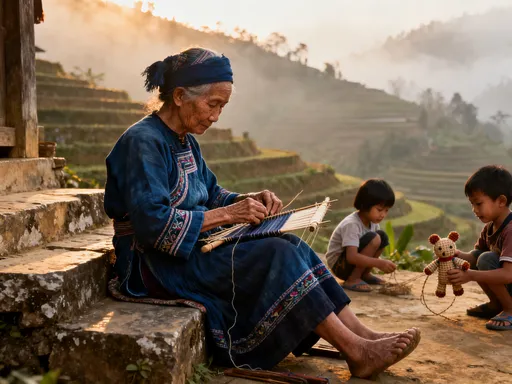
What makes shopping on Don Det special is its intimacy. There’s no pressure to buy; instead, vendors often invite you to sit, to sip a coconut, to ask about the making process. One afternoon, I watched an elder demonstrate the weaving technique used for traditional *sinh* skirts, her fingers moving with a lifetime’s precision. The textile she was finishing bore a diamond pattern symbolizing protection—a motif passed down through generations. Purchasing such an item isn’t just about acquiring a souvenir; it’s about honoring a craft that might otherwise fade. Even the coffee sold in small packets—often grown in nearby highlands—is more than a beverage. It’s a taste of local agriculture, roasted in small batches over wood fires, its aroma carrying notes of earth and smoke.
Yet not all goods are created equal. Along the main strip, some stalls do carry imported trinkets—plastic bracelets, generic keychains, and imitation textiles that lack the soul of authentic work. The discerning traveler learns to distinguish between what is made here and what is merely sold here. A simple question—“Did you make this?”—can open a conversation that leads to better finds. On a quieter trail behind the main road, I discovered a family-run stall where a mother and daughter sold only items they had crafted themselves: cotton bags dyed with natural indigo, hand-stitched notebooks wrapped in banana leaf paper, and delicate earrings made from repurposed seeds. These are the moments self-driving enables—venturing just a little off the beaten path to find something real.
Don Khon: Where Heritage Meets Craftsmanship
If Don Det offers charm, Don Khon delivers depth. This island carries a layered history, once serving as a key point in the French colonial railway system designed to bypass the Khone Phapheng Falls, the largest waterfall in Southeast Asia. Remnants of rusted tracks and old locomotives still dot the landscape, silent witnesses to a bygone era. But beyond the historical relics, Don Khon is a living center of Lao artisanship. Here, craftsmanship is not a performance for tourists but a continuation of cultural identity. Families in small villages continue to practice textile weaving, wood carving, and natural dyeing using techniques refined over centuries.
Self-driving on Don Khon reveals workshops tucked into family homes—open-air spaces where looms click steadily in the shade. One such stop, reached via a narrow dirt road branching off the main trail, is run by a collective of women from the Lao Loum ethnic group. They specialize in *matmii*, a form of ikat weaving where threads are tied and dyed before being woven into intricate patterns. Each piece can take weeks to complete, and the designs often tell stories—of rivers, rice fields, or ancestral spirits. The women welcome visitors not as customers, but as guests, offering tea while explaining the symbolism behind each motif. To buy a scarf or table runner from them is to support a tradition that sustains entire households.
Woodcraft is another hallmark of Don Khon’s creative spirit. Local artisans carve spoons, bowls, and figurines from sustainable hardwoods, often using only hand tools. Unlike mass-produced carvings sold in cities, these items bear the marks of their making—the slight asymmetry, the grain patterns emphasized by natural oils. Some carvers incorporate motifs from Buddhist iconography, such as lotus blossoms or nagas (serpent deities), not for commercial appeal but as expressions of faith and heritage. These pieces are not just decorative; they are imbued with meaning. One carver, a retired teacher named Somphone, told me he began sculpting after retirement to preserve the stories his grandfather once shared. “If we don’t pass them on,” he said, “who will?”
Because Don Khon is slightly larger and less densely touristed than Don Det, driving allows access to these artisans without the crowds. You can time your visits for late morning or early afternoon, when families are most active in their workshops. There’s a quiet dignity in these encounters—a mutual respect that flourishes when travel is slow and intentional. The self-driver doesn’t just see the island; they begin to understand it.
Hidden Markets Only Drivers Can Reach
One of the greatest advantages of self-driving in Si Phan Don is the ability to discover markets that don’t appear on maps or tour itineraries. These are not permanent bazaars but temporary gatherings—weekly vendor meetups, riverside pop-ups, or family stalls set up during harvest season. Often, they exist solely because locals need a place to trade surplus goods, and tourists happen to be welcome. Their locations shift, their hours are informal, and their existence depends on the rhythm of village life. A driver, equipped with mobility and curiosity, stands the best chance of finding them.
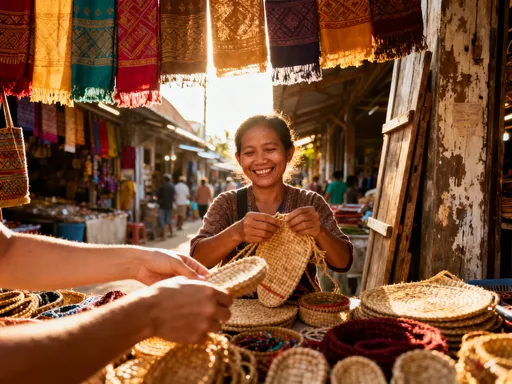
One such market appears every Friday afternoon on the northern tip of Don Khon, near a bend in the river where fishing boats dock. It begins modestly: a few women arranging baskets of wild herbs, a man laying out hand-carved combs, another offering small jars of organic honey collected from forest hives. As the sun lowers, more vendors arrive—some paddling over from nearby islets. The selection varies weekly, but common finds include hand-pressed coconut oil, bamboo straws, and pottery fired in traditional kilns. The clay comes from riverbanks, and the glazes are made from natural minerals, giving each bowl or cup a unique finish. These items are functional, beautiful, and deeply rooted in local practice.
Another hidden spot, accessible only by a narrow trail on Don Det’s eastern side, is a family-run shop that operates more like a community exchange. Run by a couple in their fifties, it sells nothing imported. Instead, they offer handmade soaps using lemongrass and tamarind, woven mats made from water hyacinth, and cotton garments dyed with turmeric and annatto. They accept barter as readily as cash, reflecting a tradition older than tourism. I once saw a traveler offer a pair of sunglasses in exchange for two scarves—and the smile on the shopkeeper’s face suggested the deal was more than fair. These moments are rare in commercial tourism, yet they define the spirit of Si Phan Don.
Because these markets are informal, they require patience and openness. There are no price lists, no credit card machines, no English signage. Transactions happen slowly, often accompanied by shared fruit or stories. But for the traveler willing to engage, the rewards are profound. You’re not just buying a product—you’re participating in a system of mutual support. And because these spots are rarely reached by foot or bicycle, self-driving isn’t just convenient; it’s essential to the experience.
What to Buy (And What to Skip)
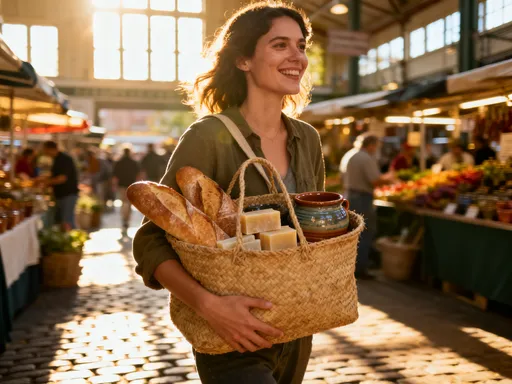
With so many offerings, it’s natural to wonder: what’s worth bringing home? The answer lies in authenticity. The most meaningful purchases in Si Phan Don are those that reflect genuine local skill and tradition. A handwoven *sinh* skirt, with its intricate borders and natural dyes, is not only beautiful but a wearable piece of cultural heritage. Similarly, hand-stamped fabrics—often created using wooden blocks and plant-based inks—carry designs unique to specific villages. Organic honey from forest bees, harvested sustainably, supports both beekeepers and ecosystem preservation. These are the items that, when displayed or used at home, spark conversations and memories.
On the other hand, there are items best left behind. Mass-produced souvenirs—plastic figurines, machine-printed T-shirts, or cheap jewelry—do little to support local economies and often harm the environment. They are usually imported from elsewhere in Southeast Asia and sold at inflated prices. Worse, they dilute the authenticity of the region’s offerings. A discerning shopper learns to look beyond packaging and branding, seeking out signs of handmade work: uneven stitching, natural materials, and personal stories behind the product.
Pricing is another consideration. While Laos is generally affordable, it’s important to pay fairly. A scarf that took days to weave should not be bargained down to a few dollars. Most vendors have reasonable prices in mind, and a small premium ensures artisans are valued for their labor. Bargaining is acceptable but should be respectful—more a negotiation than a contest. A smile, a thank-you in Lao (“khob chai”), and a willingness to listen go further than any discount. When you buy thoughtfully, you’re not just a tourist; you’re a partner in preservation.
Navigating Logistics: Parking, Timing, and Local Etiquette
Practical considerations matter when exploring Si Phan Don by vehicle. Parking is informal—most stalls don’t have designated lots, so pull over gently on the roadside, avoiding obstruction of homes or footpaths. A simple nod or wave to nearby residents goes a long way in maintaining goodwill. Timing is also key. Markets and workshops are most active in the morning and late afternoon, when temperatures are cooler and families are working. Midday, especially in the dry season, can be quiet, with many locals resting during the heat.
When interacting with shopkeepers, a few etiquette rules enhance the experience. Always ask before taking photos—some artisans are happy to pose, while others prefer privacy. Carry small bills in Lao kip, as change can be difficult to find in remote areas. If you don’t speak Lao, a few basic phrases—“sabaidee” (hello), “khob chai” (thank you)—show respect and often lead to warmer exchanges. Remember, these are not commercial transactions in the Western sense; they are moments of human connection.
Equally important is environmental awareness. Many artisans use sustainable materials and traditional methods that protect the land and water. As a traveler, you can honor that by minimizing waste, refusing plastic bags, and choosing items that last. A well-made basket, for instance, can serve for years, replacing disposable alternatives. By aligning your habits with local values, you become part of the stewardship that keeps Si Phan Don beautiful.
Why These Shopping Experiences Define the Trip
In the end, the true value of shopping in Si Phan Don isn’t measured in souvenirs but in stories. Each item purchased—whether a scarf, a spoon, or a jar of honey—carries with it a memory of a face, a conversation, a shared moment under the Lao sun. These are not impulse buys but intentional choices, made with awareness and appreciation. They represent a form of travel that goes beyond sightseeing: a deeper engagement with people, culture, and place.
Shopping here is not consumerism; it’s cultural exchange. It’s a way of saying, “I see your skill. I honor your tradition. I want to carry a piece of this moment with me.” And in doing so, travelers help sustain livelihoods that might otherwise struggle in an increasingly globalized world. The woman who weaves for hours under a thatched roof, the carver who shapes wood with his grandfather’s tools, the family that opens their home as a market—they are the heart of Si Phan Don.
Self-driving enhances this connection by granting access, time, and autonomy. It allows you to move at a pace that invites discovery, to pause where others rush, to find the unmarked path that leads to something real. In a world where travel can feel transactional, Si Phan Don reminds us of its soul. It asks not that we take everything, but that we take only what matters—and leave behind gratitude, respect, and the quiet hope that such places endure.
The journey through Si Phan Don is more than a route on a map. It is a slow unfolding of beauty, craft, and human warmth. The hidden markets are not just places to shop—they are invitations to belong, however briefly, to a way of life that values patience, care, and connection. For the mindful traveler, that is the most precious souvenir of all.