You Won’t Believe These Hidden Public Spaces in Sapa
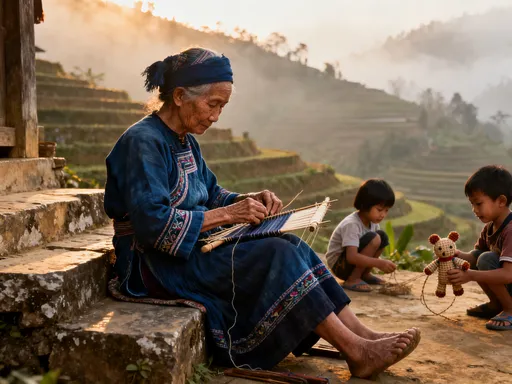
Nestled in the misty highlands of northern Vietnam, Sapa is more than just rice terraces and trekking trails. Beyond the well-trodden paths lie quiet village squares, communal hillside benches, and riverside gathering spots where locals laugh, weave, and share stories. These hidden public spaces reveal the soul of Sapa in ways no tourist site ever could—authentic, warm, and alive with daily life. While many visitors come for the panoramic views and photo opportunities, those who pause to observe the in-between moments discover a deeper rhythm: the hum of conversation under tiled eaves, the rustle of fabric as grandmothers stitch embroidered patterns, the soft clatter of wooden shuttles in open-air looms. It is here, in these unassuming corners, that community breathes.
The Quiet Heart of Sapa: More Than Just Scenery
Sapa has long been celebrated for its emerald rice terraces cascading down mountain slopes, its vibrant hill tribe markets, and the promise of immersive trekking adventures through remote villages. These attractions draw thousands each year, and rightfully so—they are breathtaking. Yet, beyond the postcard-perfect landscapes lies a quieter, often overlooked dimension of life: the informal public spaces where daily routines unfold with gentle constancy. These are not marked on maps or promoted in brochures, yet they form the emotional core of Sapa’s villages. They are the stone-paved courtyards where children play tag between wooden stilt houses, the shaded doorways where elders sip tea and exchange news, and the narrow alleys where neighbors pause mid-step to chat about harvests or weather.
What makes these spaces significant is not their physical grandeur but their role as living connectors. Unlike formal plazas or designated parks, they emerge organically from the flow of life. A flat rock beside a footpath becomes a resting spot; a low wall around a garden doubles as a bench for afternoon gatherings. These spaces thrive on spontaneity and familiarity. For travelers willing to slow down, they offer an intimate window into the rhythms of local existence. The morning light catches women sorting herbs on woven mats, their fingers moving with practiced ease. Smoke curls from clay chimneys as families prepare meals over open fires. Chickens peck at scattered grain while dogs nap in patches of sun. There is no performance here—only the quiet dignity of everyday life.
Understanding these spaces requires shifting perspective—from seeking sights to observing moments. It means recognizing that culture is not confined to festivals or costumes but lives in the way people gather, rest, and interact. In Sapa, community is not something scheduled; it is woven into the landscape itself. The absence of formal architecture does not diminish their importance. On the contrary, it underscores how deeply social connection is embedded in the fabric of daily survival and joy.
Where Locals Gather: The Unseen Social Fabric
Across Sapa’s villages, public life unfolds in subtle, unstructured ways. There are no grand town halls or civic centers, yet social cohesion remains strong, sustained by a network of informal gathering places. One of the most common is the communal drying field—flat, open areas where crops like corn, chili, and rice are laid out under the sun. During harvest season, these fields buzz with activity, but even in quieter months, they serve as natural meeting points. Farmers stop by to check their produce, neighbors exchange greetings, and children run freely across the packed earth. The act of drying food becomes a shared ritual, reinforcing both sustenance and solidarity.
Another unexpected hub is the shaded staircase. In villages built on steep inclines, stone or wooden steps link homes and pathways. Over time, certain landings have evolved into favored resting spots. In the late afternoon, when the sun dips behind the peaks, it is common to see groups of teenagers lounging on these steps, laughing and sharing snacks. Older residents use them as pause points during walks, engaging in quiet conversation with passersby. These staircases, never intended as social spaces, have become de facto living rooms for the community—open-air, accessible, and embedded in daily movement.
Equally important are the open-air pavilions found in larger villages. Often constructed from wood and thatch, these simple structures host village meetings, traditional ceremonies, and seasonal celebrations. During Tet or New Year festivities, they transform into stages for music and dance. At other times, they remain quiet, serving as shelter during sudden rains or as shaded retreats for card games and storytelling. The scent of woodsmoke lingers in the beams, and the sound of Hmong folk songs occasionally drifts through the air. Indigo-dyed textiles hang nearby, flapping gently in the breeze—a visual reminder of the artistry woven into everyday life.
Sensory details anchor these spaces in authenticity. The earthy aroma of damp soil after a mountain shower, the metallic clang of a blacksmith’s hammer in the distance, the soft murmur of dialects unintelligible to outsiders—all contribute to an atmosphere that feels lived-in and genuine. These are not curated experiences but real, unfiltered moments of human presence. For the observant traveler, they offer a rare opportunity to witness culture not as spectacle, but as practice.
From Market Steps to Village Crossroads: Function Meets Community
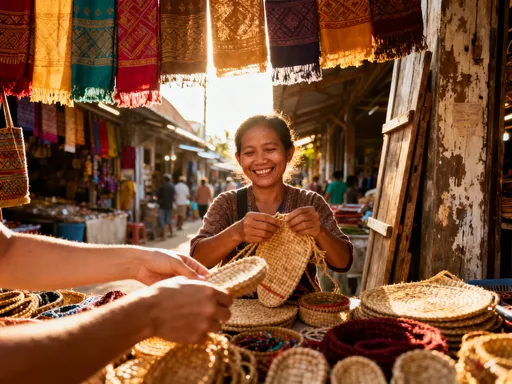
In Sapa, the boundary between utility and social life is often blurred. Infrastructure designed for practical purposes naturally evolves into spaces of connection. Nowhere is this more evident than in the market steps of Sa Pa town and surrounding villages. The central market, famous for its colorful stalls selling handicrafts and produce, is surrounded by wide stone steps. Tourists often rush past them, heading straight for the goods, but locals know their true value. These steps are among the most frequented social spots in the area.
Morning brings farmers setting down their baskets, taking a seat to rest before selling their wares. Women in traditional Hmong attire gather in clusters, comparing prices and sharing updates about family and crops. As the day progresses, the steps become a place for chance encounters—old friends reuniting, distant relatives catching up, young people exchanging glances. By late afternoon, when the market winds down, the steps transform again, this time into a quiet observatory where people sit and watch the changing light over the valley.
Similarly, footpaths that connect villages serve not only as transit routes but as conduits for information. Along these narrow trails, travelers meet neighbors carrying firewood or water, and brief exchanges turn into full conversations. News travels fast this way—about weddings, births, weather changes, or upcoming events. The path itself becomes a kind of living newsfeed, updated in real time by those who walk it. Even a simple bridge over a stream can become a spontaneous meeting point. It is common to see two women pausing mid-crossing to chat, their baskets balanced on hips, while children dart around them, daring each other to peer into the rushing water below.
One particularly touching example is the community water tap, often located at the edge of a village. This functional fixture becomes a daily gathering place, especially in the early hours. Women line up with large plastic jugs, washing vegetables, rinsing clothes, and scrubbing pots. The act of water collection, essential and routine, turns into a social ritual. Gossip flows as freely as the water. Laughter rings out. Advice is shared about cooking, child-rearing, or medicinal herbs. These moments, though ordinary, are vital—they reinforce bonds, sustain traditions, and preserve collective memory. In a world increasingly dominated by digital connection, Sapa’s villages remind us that community can still be rooted in physical presence and shared labor.
Design Without Designers: How Nature Shapes Shared Spaces
The public life of Sapa is not the product of urban planning or architectural design. Instead, it emerges from a deep interplay between people and their environment. The mountainous terrain, unpredictable weather, and agricultural lifestyle all shape how and where communities gather. Nature itself becomes the architect, carving out spaces that are both functional and social.
Consider the terraced slopes that define Sapa’s landscape. While primarily used for farming, their stepped structure creates natural seating arrangements. During planting or harvesting season, families work together across different levels, calling to one another across the tiers. When the work is done, these same terraces become places to rest, eat, and talk. From a distance, they look like green stairways to the sky; up close, they are stages for everyday life. On cooler days, the sun-warmed stones offer comfortable perches, and the wide views encourage lingering conversations.
Streamside clearings are another example of nature-enabled gathering. Small open areas along riverbanks, cleared of brush and smoothed by foot traffic, serve as play zones for children and rest stops for adults. These spots are often shaded by overhanging trees, providing relief from the midday sun. In some villages, flat rocks near the water’s edge are used as informal washing stations, where clothes, vegetables, and even small animals are cleaned. The sound of flowing water adds a calming backdrop to these activities, turning utilitarian tasks into peaceful, almost meditative experiences.
Weather, too, plays a decisive role in shaping public interaction. Sapa is known for its frequent fog and sudden rains, which push outdoor activities under cover. As a result, covered porches,屋檐 (eaves), and the overhanging roofs of stilt houses become essential social spaces. Families gather here during storms, and neighbors stop by to stay dry. These semi-enclosed areas blur the line between private and public, allowing for spontaneous visits and extended conversations. The climate, rather than isolating people, drives them together—under shelter, in warmth, in conversation.
This organic relationship between environment and social behavior reflects a profound adaptability. There are no blueprints, no zoning laws, no designated recreation zones. Yet, through necessity and habit, the people of Sapa have created a rich tapestry of shared spaces. Each one responds to the demands of terrain, weather, and tradition, proving that community does not require formal design to flourish. Sometimes, the most meaningful connections grow in the simplest of settings—where nature and necessity meet.
Tourism’s Footprint: Balancing Access and Authenticity
As Sapa’s popularity continues to rise, the delicate balance between tourism and local life is being tested. More visitors mean greater economic opportunity, but also increased pressure on the very spaces that make the region special. Some villages have seen changes—new benches installed, signage added, and pathways widened to accommodate tour groups. In certain areas, once-quiet courtyards now echo with the chatter of guided tours. While these developments can improve accessibility, they also risk turning authentic community spaces into staged performances.
The challenge lies in preserving the integrity of these places without closing them off. Complete isolation is neither practical nor desirable. Many locals welcome respectful visitors, recognizing that cultural exchange can be mutually enriching. The key is mindful engagement—ensuring that tourism enhances rather than erases the everyday life of the villages. Some communities have taken proactive steps. In Cat Cat and Ta Van villages, for example, local leaders have implemented visitor guidelines that limit group sizes and designate certain areas as off-limits during family events or rituals. These measures help protect privacy while still allowing access.
Other initiatives focus on education. Homestay programs, run by families in traditional stilt houses, offer travelers a chance to experience village life from the inside. Guests eat meals with their hosts, participate in simple tasks like feeding animals or preparing food, and learn about customs firsthand. These interactions foster genuine connection and reduce the tendency to treat the village as a backdrop for photos. By staying with a family, visitors gain insight into the values, routines, and challenges of daily life—far beyond what a short tour can provide.
There is also growing awareness among tour operators about the importance of low-impact travel. Some now emphasize small-group treks led by local guides who speak multiple languages and understand cultural sensitivities. These guides not only ensure safety but also help visitors interpret what they see—explaining the significance of a weaving pattern, the purpose of a communal tool, or the meaning behind a particular greeting. This kind of informed guidance transforms tourism from passive observation into active understanding, helping to bridge cultural gaps.
How to Experience These Spaces Respectfully
For travelers seeking meaningful connection, the way they engage with Sapa’s hidden public spaces matters deeply. The goal should not be to capture the perfect photo, but to witness and honor the reality of local life. This begins with timing. Visiting during non-peak hours—early morning or late afternoon—allows for quieter, more authentic encounters. Midday, when tour groups arrive, can feel intrusive; arriving earlier or staying later offers a chance to see daily routines unfold without disruption.
Dress modestly and move slowly. Wearing bright, flashy clothing can draw unwanted attention and create a sense of separation. Opting for simple, earth-toned attire helps blend in and shows respect for local norms. Moving at a relaxed pace signals that you are not in a hurry, making it easier for locals to approach or acknowledge you. A smile, a nod, or a quiet “xin chào” (hello) in Vietnamese can open doors more than any camera lens.
Always ask before taking photographs. While some people may welcome a picture, others may find it invasive, especially in private or ceremonial moments. A simple gesture—holding up your camera and pausing for consent—goes a long way. If someone declines, accept it gracefully. There is value in simply observing, in remembering a moment with your eyes rather than your phone.
Engaging through a local guide is one of the most effective ways to connect meaningfully. Guides not only provide context but also act as cultural intermediaries, helping to navigate language barriers and social customs. They can introduce you to families, explain traditions, and ensure that your presence is welcome. Consider bringing a small notebook to jot down observations or phrases you learn. Even picking up a few words in Hmong or Dao can show effort and appreciation.
If invited into a home or offered tea, accept with gratitude. These gestures are not mere hospitality—they are acts of trust. Sitting on the floor, sharing a simple meal, or watching a grandmother weave can create lasting memories far more powerful than any souvenir. The goal is not to become part of the scene, but to be a respectful witness to it.
Why These Hidden Corners Matter—For Travelers and Locals Alike
The hidden public spaces of Sapa are more than just places—they are living testaments to the resilience and richness of community life. For locals, they are anchors of identity, spaces where traditions are passed down, relationships nurtured, and daily survival made bearable through shared effort. For travelers, they represent a rare opportunity to move beyond the surface of tourism and touch something real. In an age of curated experiences and instant gratification, these spaces remind us that the most profound moments often arise from simplicity.
True travel insight does not come from checking off landmarks, but from the quiet moments in between—the shared silence on a hillside bench, the laughter of children chasing a ball through a courtyard, the patient hands of an elder repairing a fishing net. These are the fragments that stay with us, long after the photos fade. They teach us that connection is not always loud or dramatic; sometimes, it is found in the rhythm of a loom, the steam rising from a morning pot of tea, or the way a village greets the dawn without fanfare.
For the people of Sapa, these spaces are not hidden by choice, but by the simple fact that they are ordinary. They do not exist for show; they exist because life happens there. And yet, in their ordinariness lies their magic. They are proof that culture is not something preserved behind glass, but something lived, breathed, and continually renewed.
To the traveler, the invitation is clear: seek depth over spectacle. Walk slowly. Listen more than you speak. Let go of the need to document everything. Instead, open yourself to the unscripted moments—the ones that cannot be staged, sold, or simulated. In doing so, you do not just see Sapa—you begin to understand it. And in understanding, you honor it. The hidden public spaces of Sapa are not just places to visit. They are invitations to witness, to connect, and to remember what it means to be part of a community.